
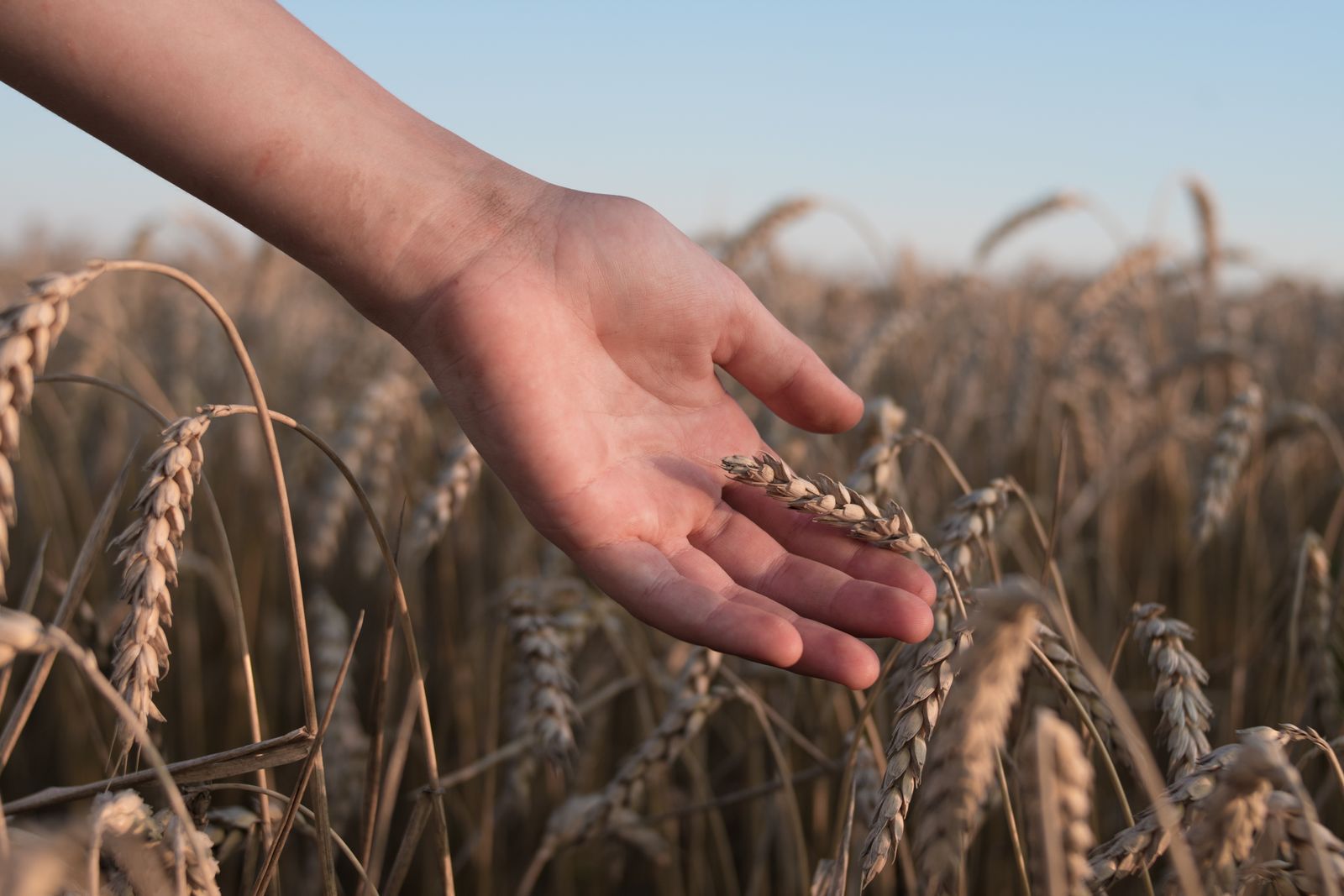
A satellite can tell you that a patch of a field is behaving differently from its surroundings. It cannot, on its own, tell you whether that difference is a pest, a nutrient deficiency, a drainage issue, or simply a patch of different soil that has always behaved this way. Remote signals are excellent at detecting that something has changed and comparatively poor at explaining why.
That explanatory step still depends on someone walking the ground — checking the underside of a leaf, testing the soil by hand, asking the person who has farmed that plot for a decade what they have seen there before.
The more useful way to think about field observation is not as a competitor to remote monitoring, but as its feedback loop. Every confirmed field visit — pest identified, deficiency confirmed, false alarm ruled out — can provide a labelled example to evaluate and improve the next round of remote detection.
Observation is an established agricultural capability
FAO’s Farmer Field School approach brings together groups of 20–30 farmers for practical learning over a production cycle. FAO reports that the approach has been implemented in more than 130 countries. The programme description emphasises experimentation, ecological understanding and locally relevant decisions. This is a reminder that interpreting the field is a learned capability, strengthened by repeated observation and discussion.
Digital services can make those observations easier to retrieve and compare, but the quality still depends on the person collecting them. A photograph without a crop stage or location can be difficult to interpret. A symptom description without the number of plants inspected provides little indication of prevalence. The record should preserve enough context for another agronomist to understand what was seen and what remains uncertain.
Collect evidence that can distinguish causes
A useful visit begins with a specific question. If imagery shows a weak patch, the scout should inspect that location and a relevant comparison area. Record crop stage, symptom distribution, recent management and the conditions under which the observation was made. Where necessary, an agronomist can request a laboratory test. Not every diagnosis can be settled by looking at a leaf or feeling the soil.
An illustrative comparison shows why sampling details matter. Finding damage on 12 plants means something different if 20 plants were examined than if 200 were examined: the observed proportions are 60% and 6%, respectively. Neither figure estimates the whole field reliably unless the sampling method is appropriate. The numerator, denominator and route through the field therefore belong in the record, together with the date and observer.
FAO’s Fall Armyworm Monitoring and Early Warning System offers a practical example. Its 2018 design description explains how field infestation and pheromone-trap observations are geolocated, uploaded immediately or later, and reviewed by national focal points. A May 2024 training report describes 45 specialists from nine Central African countries learning field identification and data collection. The lesson is that a shared application needs shared observation skills.
The observation network has continued to expand: FAO’s 2025 disaster report summary describes FAMEWS tracking infestations across more than 60 countries. Geographic reach indicates adoption of a monitoring system, not consistent data quality at every site. Field supervision and verification remain necessary as coverage grows.
Treat field labels as evidence to review
A confirmed diagnosis, an unresolved symptom and a farmer-reported concern should remain different categories. Combining them as equally certain labels can train a model to repeat ambiguity. Retain photographs and test results where available, record who reviewed the finding, and provide a way to amend a diagnosis. A later correction is useful information about both the case and the observation process.
Field feedback does not automatically improve an AI system. It must pass quality checks, enter a controlled training or evaluation process, and demonstrate improvement on independent data. The classic plant-disease study by Mohanty and colleagues achieved 99.35% accuracy within its controlled dataset but only just above 31% on differently sourced images. The original research illustrates the importance of representative conditions; it does not measure today’s model performance.
Sampling only alerted fields creates another problem: the team learns about the model’s suspicions but little about the problems it failed to flag. Routine scouting and deliberately selected unflagged fields help expose those misses. Evaluation data should also include healthy crops, ambiguous cases and different management conditions. A trustworthy feedback process records where the model was wrong as carefully as where it was right.
Close the loop with the farmer and the outcome
After a visit, the system should record the recommendation, whether it was feasible, what action occurred and when the field was checked again. An unchanged crop condition may reflect a wrong diagnosis, an ineffective intervention, delayed action or a constraint such as unavailable water. Without that history, a model may incorrectly learn that the recommendation itself failed or succeeded.
Access should suit the working environment. Offline capture, concise forms and familiar crop terminology can support timely records. The farmer should also receive an explanation of the finding and the proposed next step. Asking for information repeatedly without showing how it influences advice weakens the practical relationship on which good observations depend.
For programme managers, useful measures include complete visit records, confirmed and unresolved cases, time from alert to inspection, and follow-up completion. Yield outcomes require a more careful comparison that accounts for weather, crop stage and management. Where AI Can Actually Help the Agronomist explains how human review fits into the workflow, while Agriculture Has Data. What It Often Lacks Is Context. covers the record behind it. The field supplies the explanations and corrections that make intelligence accountable to real crop conditions.
Sources
- FAO — Farmer Field School approach — Current programme reference.
- FAO — Fall Armyworm Monitoring and Early Warning System — 19 June 2018.
- FAO — Fall armyworm monitoring training in Central Africa — 1 May 2024.
- FAO — The Impact of Disasters on Agriculture and Food Security 2025 — 14 November 2025; loss estimates for 1991–2023.
- Mohanty et al — Using Deep Learning for Image Based Plant Disease Detection — Frontiers in Plant Science, 22 September 2016.